2025 · Platform Infrastructure · 10+ Products · 1 Year
Taking an enterprise design system to the next level
Establishing workflows, governance, and quality practices needed to move a growing design system from ad hoc execution to sustainable scale.
Design Ops
Leadership
Scale
AI

01 ————
What I Inherited
A platform-wide enterprise design system with no ownership, massive tech debt, and org-wide fatigue.
This design system was a side project maintained by individuals across a dozen product teams. With decisions made in siloes, it became fragmented and inconsistent.
Production code and Figma libraries drifted apart. Changes were surfaced in feature handoffs, creating friction and eroding engineering’s trust in design.
The business viewed design system work as expensive and never-ending, yet to yield meaningful results. I needed to change that.
Component Builds
Fragmented, unfinished
Ownership
Unclear, inconsistent
Process
Undefined, ad hoc
Decision Making
On the spot, siloed
Eng/Design Collab
Limited — broken trust
Figma File Performance
Slow, impacting iteration
Prioritization
Reactive, misaligned
Adoption
Poor — lacking comms
My goal was clear ————
Transform a fragmented system into real infrastructure built for long-term success.
02 ————
Making the Case for Change
In partnership with the Director of Product Design, we developed a case that proved a dedicated effort was imperative.
ENG TIME WASTED
18%
avg. sprint capacity used on components across 10 teams
FIXING, NOT PROGRESSING
43%
backlog tickets are bugs
USER IMPACT
60%
audited screens show inconsistent component usage
SLOW DELIVERY
68%
engineers and designers reported unclear ownership
LACK OF GOVERNANCE
41%
DS jira tickets are duplicates or have conflicting needs
LOW ADOPTION
75%
releases lacked documentation or communication
A variety of audits helped make our case - surveys, Jira analytics, and product reviews.
Our approach was strategic - we didn’t present “we want budget”, but rather the business/product impact caused by the lack of a system. Executives care that teams ship slower, engineers waste time, and product quality suffers.
SUCCESS!
ELT approved a dedicated 6-person engineering team. 🎉
03 ————
Audit & Prioritize
Before executing, I needed to understand the full scope of what existed and what mattered most.

Jira Backlog Cleanup + Design Worklog
Audited 200+ Jira tickets to eliminate duplicates, consolidate conflicting requests, and establish a prioritized backlog grounded in real product needs. I also created a design-specific work list to keep eng todos separate from designs.
04 ————
Adding Immediate Clarity
Quick wins that built trust while laying the groundwork for deeper structural changes.
Figma library restructure
From 1 library to 3. A frequent point of confusion was the combination of both web and mobile components within the same library. Designers would often mistake one for the other, causing issues at handoff. Separating into Web, Mobile, and Foundations libraries allowed designers to subscribe only to what they needed, eliminating ambiguity and reducing file load times significantly.

Component availability in context
Built a system for documenting component status directly in Figma, making it immediately clear what’s available, in progress, or deprecated.

Figma branching
→ Maintain a source of truth
→ Coordinate releases with dev to keep libraries in sync
→ Add a formal review process


05 ————
Quality Execution
Systematically rebuilding components with engineering-informed constraints and craft-level attention to detail.
Component cleanup
Eliminated redundant nesting, replaced rectangle spacers with proper auto-layout, and removed unused hidden layers.
Audit example:

❌ Multiple base components control padding, spacing, and individual elements *not used elsewhere*
Extra Nesting
Extra Layers
❌ Rectangles as spacers instead of built into overall auto-layout

Extra Layers
❌ Using custom auto-layout padding on each element instead of on the overall component

Extra Layers
❌ Copied/old properties hidden in layers, unused
Extra Layers

Simplified properties
Reduced property panels from overwhelming to intuitive - consolidating variants and removing rarely-used options that created confusion.
I removed multiple unnecessary base layers, made property names consistent, and optimized components for the engineering build.
BEFORE:

AFTER:

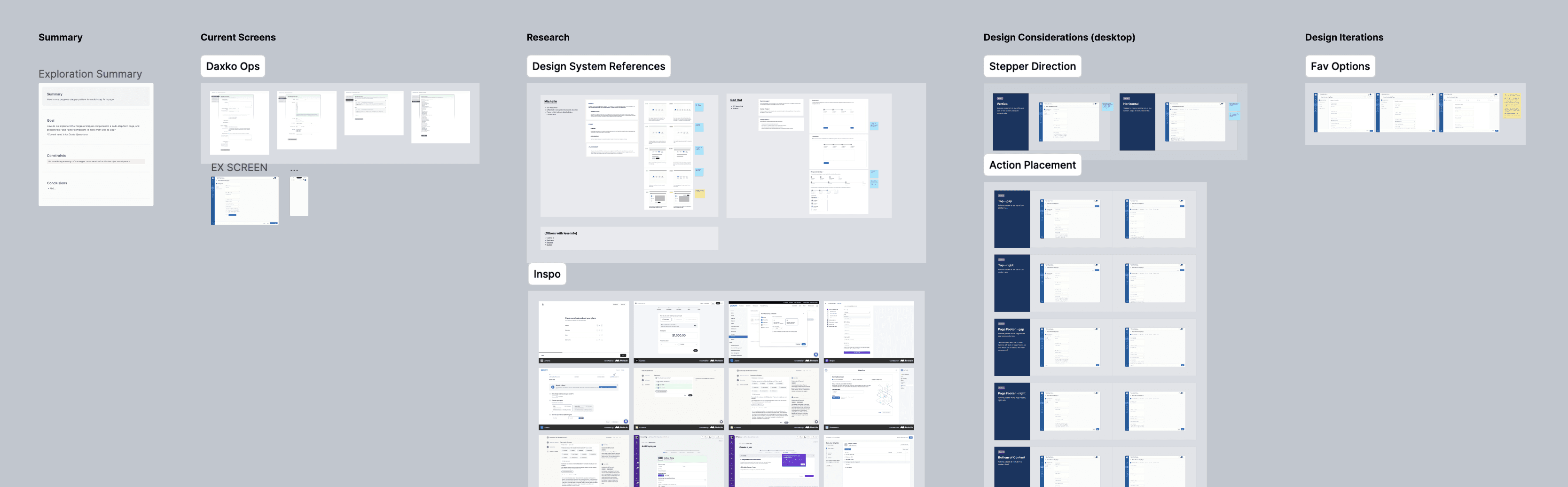
Explorations & design reviews
Ran structured explorations for each component, presenting options to stakeholders and iterating based on real use cases across product teams.

QA in Storybook branches
Established a design QA process using Storybook feature branches, catching visual regressions before they reached production.

06 ————
Socialize for Adoption
A design system only works if people use it. I invested heavily in communication, education, and visibility.
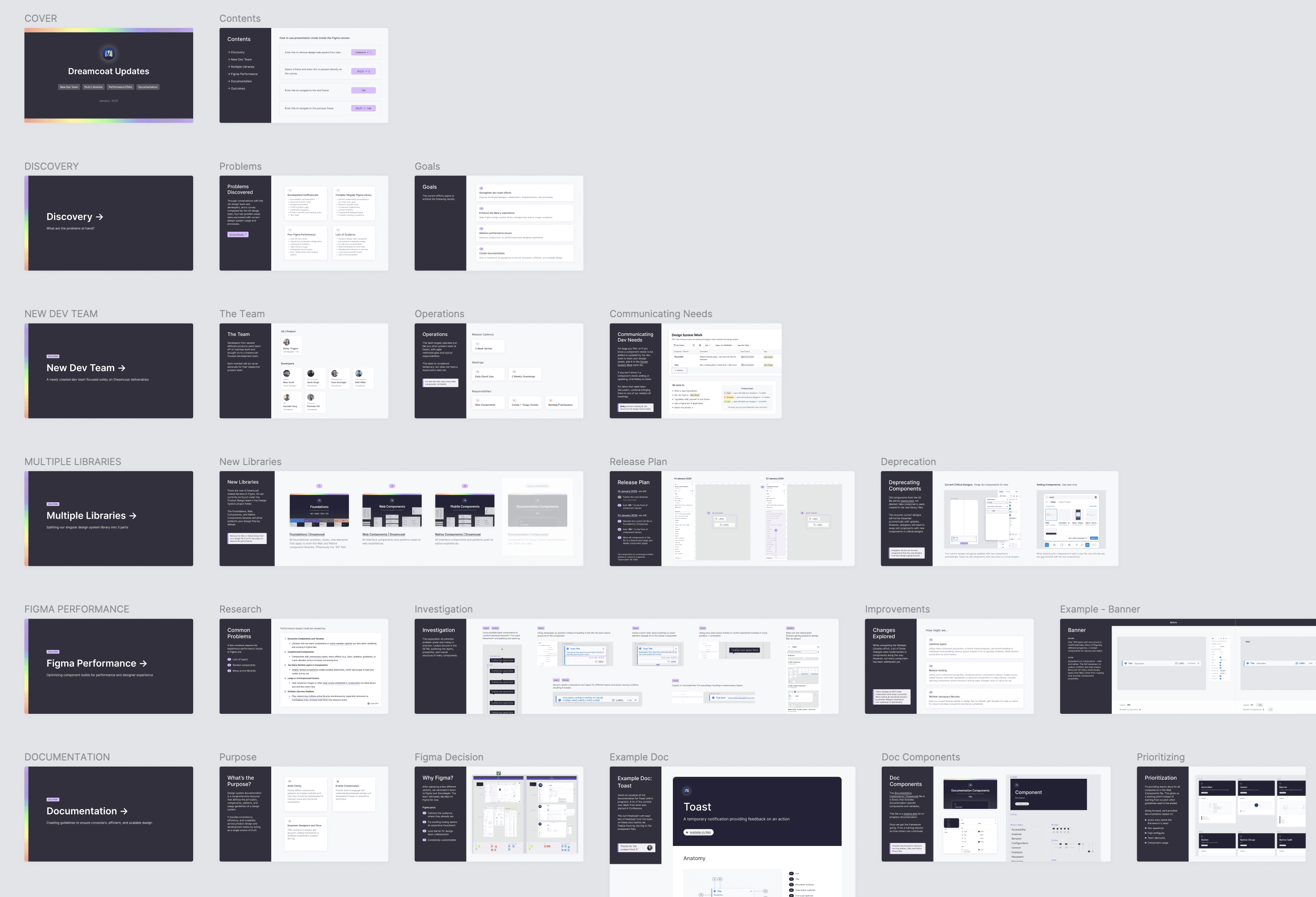
Internal ENG conference presentation
Presented our progress and roadmap at the company’s internal engineering conference to build awareness and excitement across teams.

Slack communications
Created a cadence of release announcements, migration guides, and tips - meeting people where they already were.

Design org presentations
Regular updates in design critiques and dedicated office hours ensured designers felt supported through changes.
07 ————
Scale
Building systems that outlast any single contributor - documenting, delegating, and expanding the team.
Expanding contributors
Onboarded and mentored additional designers to contribute to the system, distributing ownership across the organization.

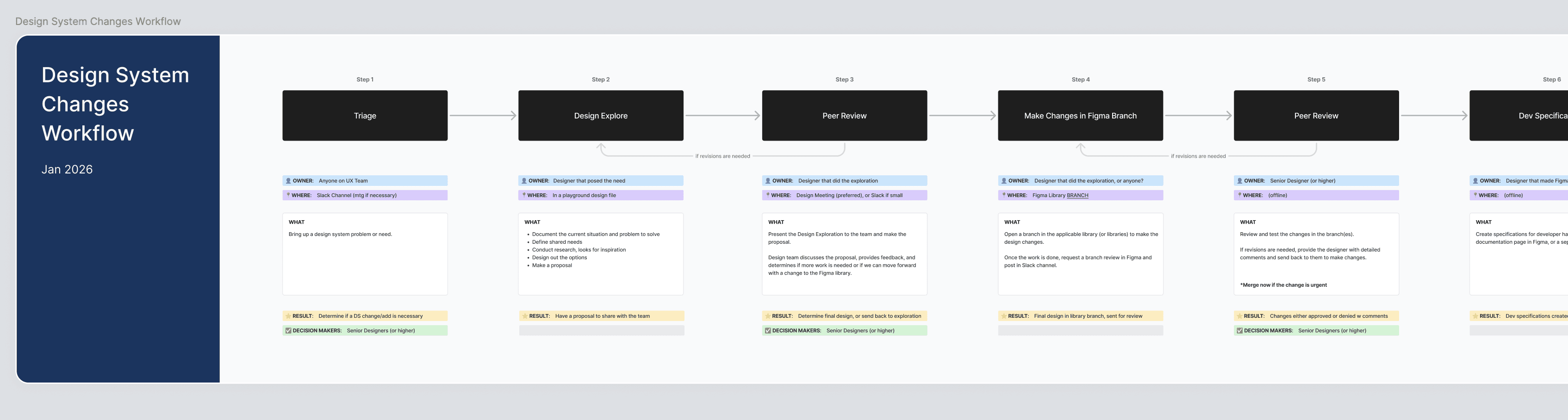
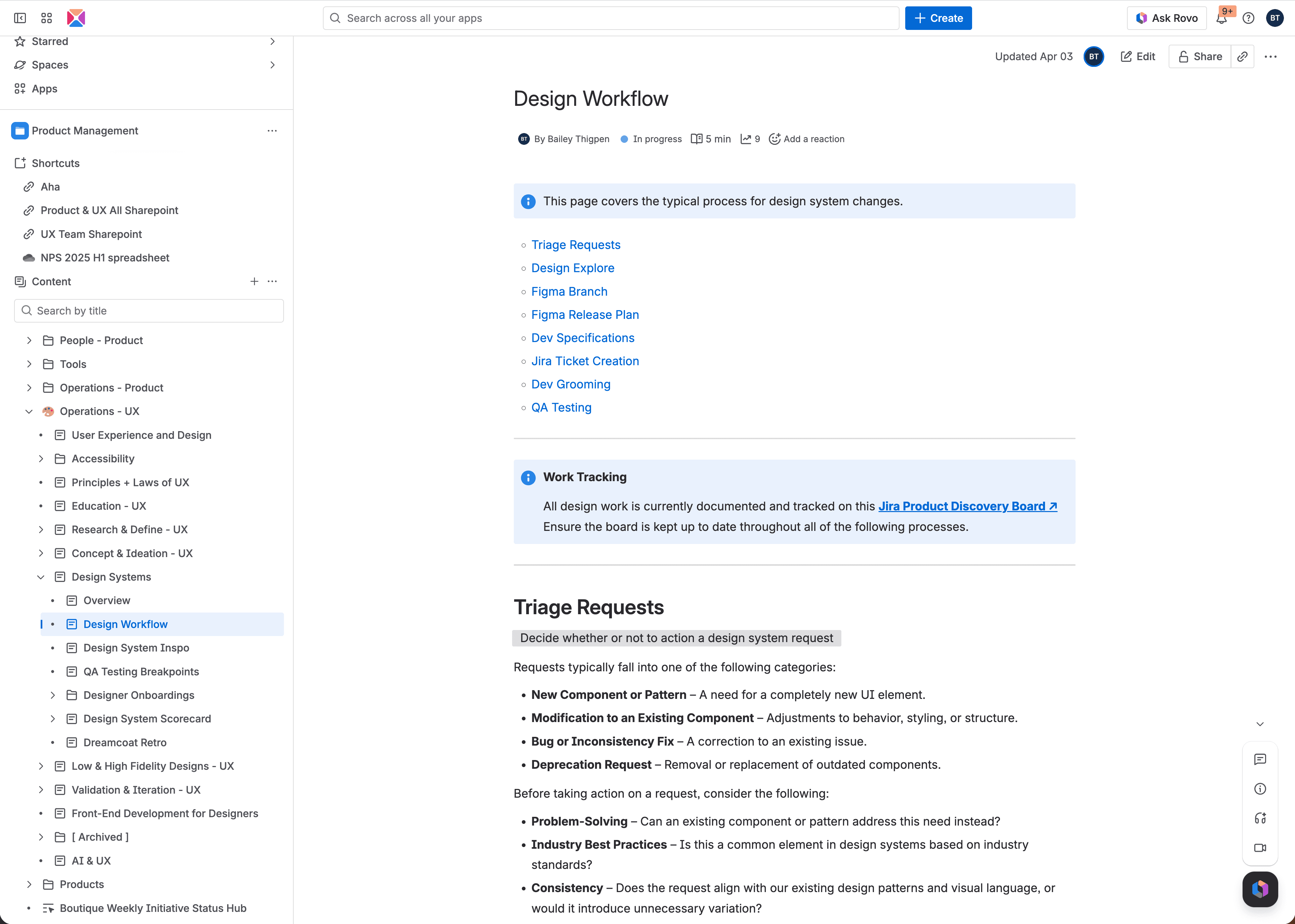
Documenting repeatable processes
Created comprehensive guides for contribution workflows, component proposal processes, and release procedures.

Retrospectives with key stakeholders
In addition to standard sprint-end retros with eng, I ran quarterly retros with a wider group to continuously refine our approach.
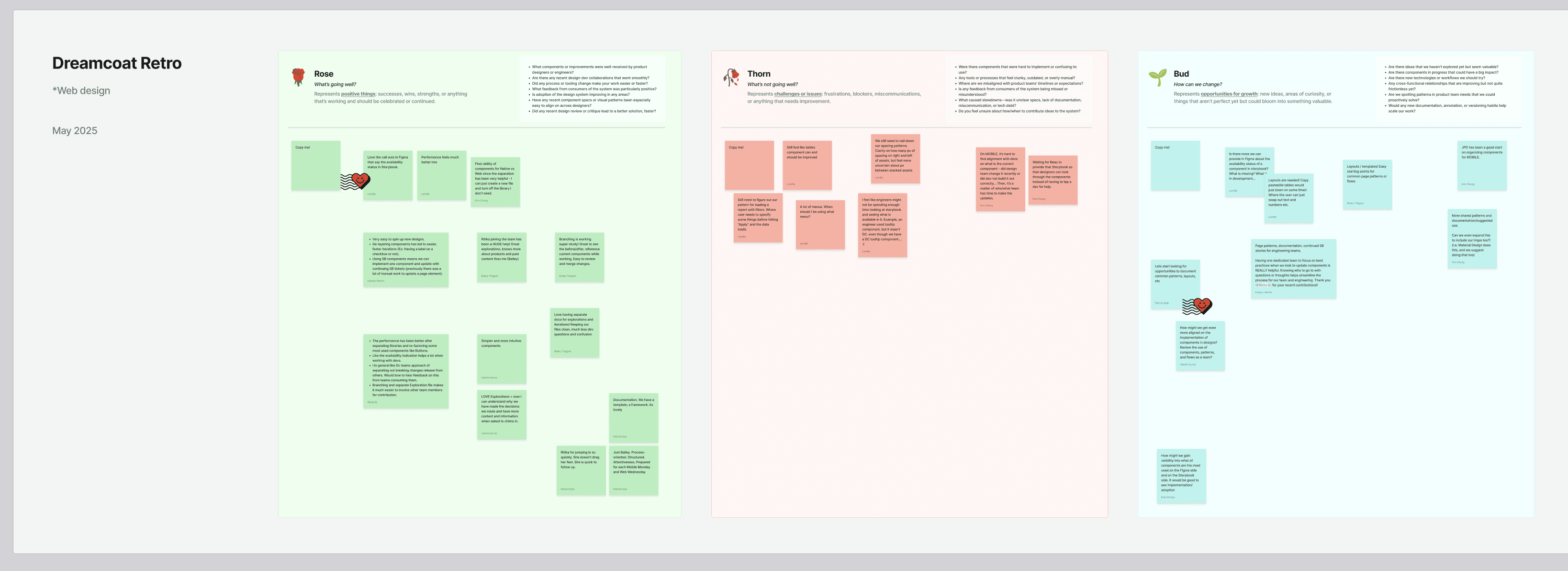
Key Outcome: Mobile team formation 🎉
Leadership saw the success of our web-focused team and approved a second engineering team dedicated to mobile components for our native apps. They adopted our processes and were operational within weeks - a direct validation of the systems we built.
08 ————
Documentation & Deliverables
Samples of documentation I authored to support adoption, onboarding, and long-term system maintenance.


09 ————
AI Experiments
Explored the latest capabilities of Claude Code and Figma MCP to see how AI can reshape design system workflows. I successfully created components directly in our dev repo, complete with Storybook branches for QA, and presented the process at our product all-hands.
The ability to bring code closer to design opens exciting possibilities for the future of design systems!


10 ————
Results
Quantified impact across design tooling, component adoption, and team efficiency over 12 months.
65
Components completed implementation in React and web component versions
70+
Figma branches merged in H1
140%
Figma file performance improvement
(measured via 2 surveys 6 months apart)
73%
Decline in detached components
(measured via Figma’s stats)
26%
Improved change communication
(measured via 2 surveys 6 months apart)
26%
Improved decision-making efficiency
(measured via 2 surveys 6 months apart)
Engineering survey

Peer recognition
“Bailey played an invaluable role in bringing Daxko’s global design system to life. From leading a dedicated engineering team through its development to the ongoing refinement of components grounded in best practices, her commitment to quality has made a lasting impact - one that our design team, product organization, and technology partners all benefit from every day.”
“Bailey Thigpen provided exceptional strategic direction by architecting scalable systems that brought clarity to the organization. She navigated ambiguity by establishing the Jira Product Discovery board for design system work, creating component spec frameworks for engineering handoffs, and standardizing project templates. Her voluntary and proactive approach-sprint release updates, meeting agendas, and feedback consolidation to leadership-built trust and prevented problems before they emerged, exemplifying unwavering team focus.”
“The intentional process to audit and define (or redefine) components based on real use cases has resulted in a stronger understanding of how components behave in practice and how they can best support consistent, scalable experiences.”
